
Book Ritual in Varanasi
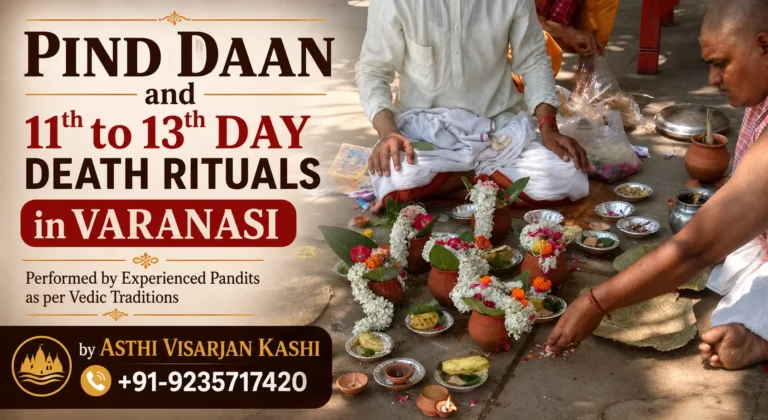
Pind Daan 11th to 13th Day Death Rituals in Varanasi Losing a loved one is one of the most emotional experiences in life. In Hindu tradition, various rituals are performed after death to pray for the peace of the departed soul and to fulfill family duties. Among these rituals, Pind Daan and the 11th to 13th day death ceremonies hold special importance.
Varanasi, the sacred city of Lord Shiva, is considered one of the most auspicious places for performing these rituals. Families from all over India visit Varanasi to complete the final rites of their ancestors according to Hindu traditions and Vedic customs.
This guide explains the importance, process, and benefits of performing Pind Daan and 11th to 13th day rituals in Varanasi.
For complete guidance about religious ceremonies in Varanasi, families can visit Asthi Visarjan Kashi.
Why Perform Death Rituals in Varanasi?
Varanasi is known as the spiritual capital of India. Hindu scriptures describe it as a city blessed by Lord Shiva and the holy River Ganga. It is believed that prayers and rituals performed in Varanasi help the departed soul attain peace and spiritual progress.
Many families choose Varanasi because of its ancient temples, sacred ghats, experienced priests, and traditional Vedic ceremonies.
Understanding the 11th, 12th, and 13th Day Rituals
After cremation and Asthi Visarjan, Hindu families observe a mourning period. During this time, special rituals are performed to honor the departed soul and seek blessings for the family.
11th Day Ritual (Ekadasha Kriya)
The eleventh day after death is considered an important milestone in Hindu funeral traditions. On this day, purification rituals are performed for the family.
Special prayers and offerings are made for the departed soul. Priests chant sacred mantras and guide the family through traditional Vedic procedures.
The purpose of this ritual is to pray for spiritual peace and prepare for the final ceremonies that follow.
12th Day Ritual (Dwadasha Kriya)
The twelfth day rituals are performed to continue the spiritual journey of the deceased. Offerings are made in memory of the departed soul.
The family participates in prayers, charity, and religious activities. Many people also donate food, clothes, and other essential items as part of the ceremony.
This day symbolizes respect, gratitude, and remembrance for the deceased family member.
13th Day Ritual (Terahvin Ceremony)
The thirteenth day, commonly known as Terahvin, marks the conclusion of the immediate mourning period.
A special puja is performed, and family members gather to pray for the peace and liberation of the departed soul. Religious texts may be recited, and Brahmins may be offered food and donations.
The ceremony signifies the completion of the primary funeral rites and the family's return to normal life while continuing to remember and honor their ancestor.
Families looking for detailed information about these ceremonies can also read 10th to 13th Day Death Rituals in Varanasi.
What is Pind Daan?
Pind Daan is one of the most sacred rituals in Hinduism. It involves offering rice balls, sesame seeds, and other sacred materials to ancestors.
The ritual is performed to express gratitude toward departed family members and to pray for their spiritual well-being.
According to Hindu beliefs, Pind Daan helps strengthen the connection between generations and fulfills an important religious duty toward ancestors.
You can also learn more about the traditional meaning of Pinda (Rice Ball Offering).
Importance of Pind Daan in Varanasi
Performing Pind Daan in Varanasi is considered highly auspicious because of the city's spiritual significance.
Some of the reasons families choose Varanasi include:
- Presence of the sacred River Ganga
- Ancient Hindu traditions
- Connection with Lord Shiva
- Experienced Vedic priests
- Historic religious importance
- Sacred ghats dedicated to rituals
Many devotees believe that performing Pind Daan in Varanasi brings blessings and spiritual satisfaction to both the family and the departed ancestors.
Read more in this detailed guide on Pind Daan in Varanasi.
Major Rituals Included During the Ceremony
Sankalp
The priest begins by taking the name, gotra, and details of the deceased person. This sacred pledge is known as Sankalp.
Pind Offering
Pindas are prepared using traditional materials and offered with prayers and Vedic mantras.
Tarpan
Water mixed with black sesame seeds is offered in memory of ancestors.
Brahmin Bhojan
Food may be served to Brahmins as a mark of respect and charity.
Daan
Charitable donations are often made to support religious and humanitarian purposes.
Final Blessings
The ceremony concludes with prayers seeking peace, prosperity, and blessings for the entire family.
Best Ghats in Varanasi for Pind Daan and Death Rituals
Varanasi has many sacred ghats where these ceremonies are performed.
Assi Ghat
Known for its peaceful atmosphere and spiritual environment.
Dashashwamedh Ghat
One of the most famous ghats where many religious ceremonies take place.
Manikarnika Ghat
Among the holiest locations in Varanasi and deeply connected with Hindu funeral traditions.
Other Sacred Locations
Depending on family traditions and priest recommendations, rituals may also be conducted at other important places in Varanasi.
Learn more about sacred locations in this guide to the Best Ghats in Varanasi.
Who Can Perform Pind Daan?
Generally, the eldest son performs the ritual. However, in many situations, other family members may also participate.
The priest provides guidance according to family traditions, customs, and circumstances.
Documents and Information Required
Before performing the rituals, families should keep the following information ready:
- Name of the deceased
- Gotra (if known)
- Date of death
- Family details
- Basic identification documents if required
Benefits of Performing Pind Daan and 11th to 13th Day Rituals
Honoring Ancestors
The rituals express respect and gratitude toward departed family members.
Spiritual Peace
Prayers are offered for the peace and well-being of the soul.
Religious Duty
The ceremonies help families fulfill important Hindu traditions.
Family Unity
Relatives gather together to remember and honor their loved one.
Cultural Preservation
Ancient customs and traditions continue to be passed on to future generations.
Can Families from Other States Perform These Rituals?
Yes. Families from Andhra Pradesh, Telangana, Tamil Nadu, Karnataka, Kerala, Maharashtra, Gujarat, Delhi, Punjab, Uttar Pradesh, Bihar, and other states regularly visit Varanasi for these ceremonies.
Priests can guide families in Hindi, English, Telugu, Tamil, Kannada, Marathi, and other languages depending on availability.
Online Assistance and Video Participation
In situations where family members cannot travel to Varanasi, arrangements may be available for ritual assistance and live video participation.
This allows relatives living in different cities or countries to witness the ceremony and offer prayers remotely.
Best Time to Perform the Rituals
The rituals are generally performed according to the death date and traditional Hindu customs.
Special occasions such as Amavasya, Pitru Paksha, and other sacred dates are also considered important for ancestor-related ceremonies.
Conclusion
Pind Daan and the 11th to 13th day death rituals are important parts of Hindu traditions that help families honor their departed loved ones with faith and devotion. Performing these ceremonies in Varanasi adds spiritual significance because of the holy River Ganga, sacred ghats, and ancient religious heritage.
Through prayers, offerings, charity, and remembrance, families seek peace for the departed soul and blessings for future generations. Whether visiting personally or arranging assistance through trusted services, completing these sacred rites in Varanasi remains a meaningful and respected tradition for millions of Hindu families.
Contact
Asthi Visarjan Kashi
📞 +91-9235717420
Frequently Asked Questions
Why are the 11th to 13th day rituals important in Hindu traditions?
Can Pind Daan and the 13th day ritual be performed during the same visit to Varanasi?
What makes Varanasi a preferred destination for ancestral rituals?
How long does a complete Pind Daan ceremony usually take?
Is prior booking recommended before arriving in Varanasi?
What is the significance of Tarpan during ancestral ceremonies?
Can women participate in Pind Daan and related ceremonies?
Why is charity often included in the 12th and 13th day rituals?
What should families bring when attending the rituals in Varanasi?
Which family members usually attend the ceremonies?
Can these rituals be performed throughout the year?
Why are sacred ghats used for death rituals and Pind Daan?
What happens after the completion of the 13th day ceremony?
Can relatives living abroad participate in the ceremonies?
What is the spiritual purpose of offering Pind during Pind Daan?
Other Services You May Also Book in Varanasi
Apart from Pind Daan, Asthi Visarjan and 10th to 13th day rituals, families may also require additional religious services in Varanasi. Click any service below to learn more and book according to your requirements.
Asthi Visarjan Pandit Charges
Read More →
How to Send Asthi by Post for Varanasi Visarjan
Read More →
Asthi Visarjan Ceremony by Boat in Varanasi
Read More →
Complete Religious Services in Varanasi
Read More →
Narayan Bali Puja in Varanasi
Read More →
Asthi Visarjan Places in India
Read More →
Asthi Visarjan at Harishchandra Ghat
Read More →
Pitru Paksha 2026 Dates and Ritual Guide
Read More →
Pitru Paksha 2026 Pind Daan Booking
Read More →
Tripindi Shraddh Puja at Pishachmochan
Read More →
Narayan Bali Puja for Non-Resident Families
Read More →
Book Asthi Visarjan Online by Courier
Read More →