
Book Pind Daan in Varanasi
Fill your details and send your enquiry directly to our WhatsApp.
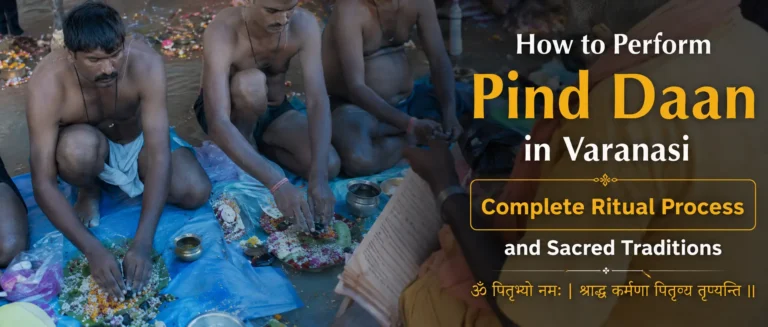
How to Perform Pind Daan in Varanasi Complete Ritual Process and Sacred Traditions Pind Daan in Varanasi is a sacred ritual that has been performed by Hindu families for generations to pray for the peace and well-being of their departed ancestors. In Sanatan Dharma, it is believed that remembering and honoring our forefathers is one of life’s most important responsibilities. Just as parents and elders guide us during their lifetime, offering prayers after their departure is considered an act of gratitude and respect.
Among all pilgrimage places in India, Varanasi, also known as Kashi, holds a special place for ancestral rituals. Every year, thousands of families travel to this ancient city to perform Pind Daan, Shradh, and Tarpan on the banks of the holy River Ganga. The peaceful atmosphere of Kashi and its deep connection with Lord Shiva make it one of the most preferred destinations for these sacred ceremonies.
Many people often ask where they should perform Pind Daan and what the proper process is. While Gaya is famous for this ritual, Varanasi is equally important and is chosen by countless devotees who wish to complete the ceremony according to traditional Vedic customs. Families visiting Kashi believe that offering prayers here brings spiritual satisfaction and helps them fulfill their duty towards their ancestors.
If you are planning to perform Pind Daan in Varanasi and want proper arrangements, Asthi Visarjan Kashi provides complete assistance for devotees coming from different parts of India. We have more than 300 verified and experienced pandits, many with over 30 to 40 years of experience in conducting Pind Daan, Asthi Visarjan, Shradh Karma, and other Vedic rituals. One-day ritual arrangements, pickup and drop facilities, and complete puja assistance are also available according to your preferred date and schedule.
For any enquiry or booking assistance, you can give a missed call on +91-9235717420
What is Pind Daan?
Pind Daan is an ancient Hindu ritual performed to offer prayers and respect to departed family members. During the ceremony, small offerings called Pind are prepared using rice, black sesame seeds, barley flour, and other sacred ingredients. These offerings are made while Vedic mantras are chanted by learned priests.
According to Hindu tradition, this ritual symbolizes love, remembrance, and gratitude towards parents, grandparents, and ancestors. It is believed that offering Pind Daan with devotion brings peace to the departed soul and blessings to the family.
Why is Pind Daan Important?
Every family shares a connection with its ancestors. Hindu scriptures explain that remembering those who came before us is a sacred duty. Pind Daan is not simply a religious custom but a way of expressing thankfulness for the life, values, and traditions passed down through generations.
Many families perform this ritual after the death of a loved one, during Shradh ceremonies, or in the sacred period of Pitru Paksha. The act of offering prayers together also provides emotional comfort and helps family members remember their loved ones with respect and devotion.
Why is Varanasi Famous for Pind Daan?
Varanasi is known as the city of Lord Shiva and is one of the oldest living cities in the world. For centuries, saints, scholars, and pilgrims have visited Kashi seeking spiritual peace. The holy River Ganga flowing through the city adds to its religious importance.
Because of its ancient traditions and strong spiritual atmosphere, many devotees believe that Pind Daan performed in Varanasi carries special significance. Families from across India visit Kashi to complete ancestral rituals and pray for the well-being of their departed relatives.
The sacred ghats, old temples, and the continuous chanting of prayers create an environment where people feel deeply connected with their faith and traditions.
The Spiritual Connection Between Kashi and the River Ganga
The River Ganga is worshipped as a divine mother in Hinduism. Her waters are considered pure and sacred, and millions of devotees visit the river every year to offer prayers.
When Pind Daan and Tarpan are performed on the banks of the Ganga, families believe they are expressing their devotion in one of the holiest places in the world. The peaceful surroundings of Kashi often provide emotional strength to those remembering their loved ones.
For many generations, this sacred city has been associated with prayer, devotion, and spiritual reflection, making it a meaningful destination for ancestral rituals.
Who Can Perform Pind Daan?
Traditionally, the eldest son performs the Pind Daan ceremony. However, depending on family circumstances and local customs, younger sons, grandsons, brothers, or other close relatives may also perform the ritual under the guidance of an experienced priest.
The most important aspect of the ceremony is sincerity and devotion. The ritual is performed with the intention of offering respect and prayers for departed family members.
Best Time to Perform Pind Daan in Varanasi
Morning hours are generally preferred for performing Pind Daan. Most families begin the ceremony after taking a holy bath and complete the rituals before noon.
Pind Daan is commonly performed:
- During Pitru Paksha.
- On the annual Shradh of ancestors.
- After the passing of a family member.
- During the 10th, 11th, 12th, or 13th day rituals.
- On special dates recommended by the family priest.
Many devotees choose to arrive in Varanasi one day before the ceremony so that all arrangements can be made comfortably.
Basic Ritual Process of Pind Daan in Varanasi
The ceremony generally begins with Sankalp, where the devotee makes a sacred resolution in the presence of the priest. After this, a holy bath in the Ganga may be taken according to tradition.
The priest then prepares the Pind using rice, black sesame seeds, barley flour, honey, and ghee. Sacred mantras are chanted throughout the ritual while the devotee offers prayers for the departed ancestors.
Tarpan is performed by offering water mixed with sesame seeds, followed by the main Pind offering. In many traditions, donations are made to priests and food is offered after the ceremony as an act of charity and goodwill.
Finally, prayers are offered for peace, prosperity, and blessings for the entire family.
What Arrangements Should You Make Before Visiting?
If you are planning to perform Pind Daan in Varanasi, it is helpful to confirm your visit in advance. This allows proper arrangements for priests, puja materials, and transportation if required.
Asthi Visarjan Kashi assists families by arranging experienced pandits, complete puja materials, and one-day ritual services according to traditional customs. Visitors coming from outside Varanasi can also opt for pickup and drop facilities for a convenient experience.
Conclusion
Pind Daan in Varanasi is not just a ritual; it is a way of remembering and honoring those who have shaped our lives. It reflects gratitude, family values, and the timeless connection between generations. Performing this sacred ceremony in the spiritual atmosphere of Kashi allows many families to complete an important religious duty with faith and devotion.
Whether you are visiting Varanasi for the first time or continuing a family tradition, performing Pind Daan with proper guidance and sincere prayer can become a deeply meaningful experience for the entire family.
For booking assistance or any enquiry regarding Pind Daan in Varanasi, Asthi Visarjan, or other ancestral rituals, you can contact us on +91-9235717420.
1. Can Pind Daan in Varanasi be performed at any time of the year?
Yes, Pind Daan can generally be performed throughout the year in Varanasi. Although many families prefer Pitru Paksha because of its religious significance, the ritual is also performed after the death of a loved one, on annual Shradh dates, and during the 10th to 13th day ceremonies. A knowledgeable priest can suggest the most suitable date according to family traditions.
2. Is it necessary to bring the ashes of the departed person for Pind Daan?
No, carrying the ashes is not always necessary. Pind Daan and Asthi Visarjan are two different rituals, though many families choose to perform them together. If the ashes have already been immersed elsewhere, Pind Daan can still be performed in Varanasi with proper Vedic rituals.
3. How much time does a complete Pind Daan ceremony usually take?
The duration depends on the family tradition and the rituals included. A simple Pind Daan generally takes around one to two hours, while ceremonies combined with Tarpan, Shradh Karma, or Asthi Visarjan may take longer. Most families complete the process comfortably within half a day.
4. Can a family coming from another state complete the ritual in a single day?
Yes. Many devotees travel from different states and complete Pind Daan in one day. With prior arrangements for priests, puja materials, and transportation, the entire ceremony can be organized smoothly, allowing families to return according to their travel plans.
5. What clothes should be worn while performing Pind Daan in Varanasi?
Simple and traditional clothing is usually preferred during the ritual. Men often wear a plain dhoti or light-colored traditional dress, while women generally wear a simple saree or modest traditional attire. Comfortable and respectful clothing helps maintain the spiritual atmosphere of the ceremony.
6. Is fasting compulsory before performing Pind Daan?
Practices may vary between families and traditions. Some devotees observe a partial or complete fast before the ceremony, while others simply maintain purity by eating simple vegetarian food. The local priest generally provides guidance based on the specific ritual being performed.
7. Can women participate in the Pind Daan ceremony?
Yes, women can be present during the ritual and offer prayers for their ancestors. In certain family traditions and circumstances, daughters or wives may also perform the ceremony under the guidance of an experienced priest, especially when no male family member is available.
8. Why do many people choose Varanasi instead of other pilgrimage places?
Varanasi has been a center of spiritual learning and ancestral worship for centuries. The presence of the holy River Ganga, ancient temples, and the association with Lord Shiva make many families feel that performing Pind Daan here carries deep religious importance and emotional value.
9. Are all the puja materials arranged locally in Varanasi?
Yes, most families do not need to carry ritual materials from home. Experienced priests or local service providers generally arrange all the essential items required for the ceremony, including rice, black sesame seeds, flowers, sacred thread, and other traditional offerings.
10. Can Pind Daan be performed for ancestors who passed away many years ago?
Yes, there is no restriction based on how much time has passed since a person's death. Many families visit Varanasi years later to perform Pind Daan for parents, grandparents, or even earlier generations as a gesture of remembrance and respect.
11. Is advance booking recommended before visiting Varanasi for Pind Daan?
Advance planning is always helpful, especially during Pitru Paksha and festival seasons when a large number of devotees arrive in the city. Booking in advance allows proper arrangements for priests, puja materials, transportation, and preferred ritual timings.
12. What is the difference between Pind Daan and Tarpan?
Pind Daan involves offering sacred Pind made from rice and other ritual ingredients, while Tarpan mainly consists of offering water mixed with black sesame seeds while chanting prayers. In many traditional ceremonies, both rituals are performed together as part of ancestral worship.
13. What should family members keep in mind while attending the ceremony?
The most important thing is to participate with devotion, patience, and respect for the ritual. Families generally arrive on time, wear simple traditional clothing, and follow the guidance of the priest throughout the ceremony. Remembering ancestors with sincerity and offering prayers peacefully is considered more important than any external arrangement.