
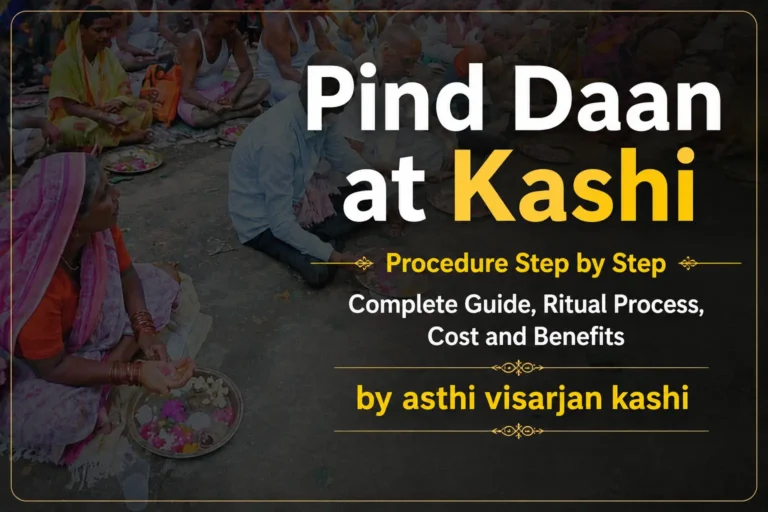
Pind Daan at Kashi Procedure Step by Step ,Ritual Process, Cost and Benefits Pind Daan is one of the most holy rituals in the Hindu religion. It is carried out in order to ensure peace and satisfaction of the deceased souls of ancestors. Each year thousands of people from various parts of India come to Kashi (Varanasi) to perform Pind Daan, as it is believed that this place is considered to be one of the holiest places dedicated to Lord Shiva and river Ganga.
According to the traditional Hindu belief, carrying out this ritual helps express gratitude to their parents, grandparents, and even their ancestors, who are not alive anymore. During the ritual special Vedic mantras are chanted by priests, and this procedure can include other ceremonies, such as Tarpan, Shradh, Ganga Puja, etc.
People from various states of India and different countries, including the USA, Canada, Australia, Singapore, Dubai, and the UK come to Kashi to perform Pind Daan.
What is Pind Daan?
Pind Daan is a ritual offering made for departed family members. During the ceremony, special offerings called "Pind" are prepared using traditional ingredients such as rice flour, barley flour, black sesame seeds, honey, and ghee.
The ritual symbolizes respect, remembrance, and prayers for ancestors. It is considered an important part of Hindu traditions and is often performed for parents, grandparents, and other deceased family members.
Learn more about the complete ritual process here: Pind Daan in Varanasi – Complete Guide
Spiritual Importance of Pind Daan
Pind Daan represents:
Respect toward ancestors
Gratitude for previous generations
Family responsibility and tradition
Prayers for spiritual peace
Blessings for future generations
Many families feel emotional and spiritual satisfaction after completing the ceremony.
Why is Kashi Famous for Pind Daan?
Kashi is one of the oldest living cities in the world and holds a special place in Hindu religious tradition.
City of Lord Shiva
According to Hindu beliefs, Kashi is the sacred city of Lord Shiva. Many devotees visit the city throughout the year seeking blessings and spiritual fulfillment.
Holy River Ganga
The River Ganga is considered sacred and purifying. Rituals performed on its banks are believed to hold special religious significance.
Ancient Religious Tradition
For generations, Kashi has been a major center for:
Pind Daan
Shradh Karma
Asthi Visarjan
Tarpan
Narayan Bali
Tripindi Shradh
The city continues to attract pilgrims from India and around the world.
Who Can Perform Pind Daan?
Pind Daan is traditionally performed by close family members.
Eligible Family Members
Son
Grandson
Brother
Husband
Close relative
In certain situations, women may also participate according to family customs and priestly guidance.
For Whom Can Pind Daan Be Performed?
The ritual may be performed for:
Father
Mother
Grandparents
Great-grandparents
Other departed ancestors
Best Time to Perform Pind Daan in Kashi
Although Pind Daan can be performed throughout the year, some periods are considered especially auspicious.
Pitru Paksha
Pitru Paksha is the most important period dedicated to ancestors.
During this time, thousands of devotees visit Kashi to perform ancestral rituals.
Death Anniversary
Many families choose the annual Shradh date of the departed person.
Amavasya
New Moon days are also considered favorable for ancestor worship.
Complete Pind Daan Procedure Step by Step
Step 1 – Arrival at the Ghat
The ritual generally begins at a sacred ghat in Kashi. Families arrive at the location and meet the priest conducting the ceremony.
The priest explains the procedure and arranges the required materials.
Popular Locations
Manikarnika Ghat
Harishchandra Ghat
Other traditional ghats along the Ganga
Step 2 – Sankalp
Sankalp is the formal beginning of the ceremony.
The devotee takes a sacred vow while sitting before the holy river.
During Sankalp
The priest mentions:
Name of the devotee
Name of the ancestors
Family lineage
Purpose of the ritual
This step marks the official start of the ceremony.
Step 3 – Purification Ritual
Before the offerings begin, purification rituals are performed.
Purpose
Purification represents mental and spiritual preparation.
Activities may include:
Holy water sprinkling
Sacred prayers
Lord Ganesha invocation
Vedic mantras
Step 4 – Preparation of Pind
The priest prepares the sacred Pind using traditional ingredients.
Ingredients Used
Rice flour
Barley flour
Black sesame seeds
Honey
Ghee
The prepared Pind symbolizes offerings made to ancestors.
Step 5 – Invocation of Ancestors
Special Vedic mantras are chanted to respectfully remember departed family members.
Significance
This stage reflects:
Respect
Gratitude
Family remembrance
Spiritual prayers
Family members participate with folded hands and devotion.
Step 6 – Offering the Pind
The prepared Pind is offered according to Vedic tradition.
Main Purpose
Prayers are offered for:
Peace of ancestors
Spiritual well-being
Family harmony
Divine blessings
This is considered the central part of the ritual.
Step 7 – Tarpan Ceremony
After Pind Daan, Tarpan is performed.
What is Tarpan?
Tarpan is the offering of water mixed with black sesame seeds while chanting sacred prayers.
The devotee slowly offers water to the holy Ganga in remembrance of ancestors.
Step 8 – Ganga Puja
Special prayers are offered to Maa Ganga.
Importance of Ganga Puja
The River Ganga is regarded as a symbol of purity and spiritual blessings.
Devotees pray for:
Family peace
Spiritual growth
Ancestor blessings
Prosperity
Step 9 – Charity and Offerings
Charity is often performed after the ceremony.
Common Offerings
Food
Fruits
Clothes
Dakshina
Many families consider charity an important part of ancestral rituals.
Step 10 – Final Blessings
The priest concludes the ceremony with final prayers and blessings.
The devotee seeks divine grace and prays for the welfare of all family members.
Best Ghats for Pind Daan in Kashi
Manikarnika Ghat
Manikarnika Ghat is among the most sacred locations in Varanasi.
Why It Is Popular
Ancient religious significance
Association with Lord Shiva
Traditional ancestral rituals
Harishchandra Ghat
Harishchandra Ghat is another respected location for Pind Daan and Shradh ceremonies.
Features
Spiritual atmosphere
Traditional rituals
Convenient arrangements
Detailed guide: Best Ghats for Pind Daan in Varanasi
Pind Daan Cost in Kashi
The cost of Pind Daan in Kashi depends on the ritual arrangements, number of priests, and additional services selected by the family.
Basic Pind Daan Package
₹3,000 – ₹5,000
Includes:
Basic Vedic Pind Daan
Ritual materials
Priest guidance
Tarpan ceremony
Suitable for families seeking a simple traditional ceremony.
Standard Pind Daan Package
₹5,000 – ₹15,000
Includes:
Complete ritual process
Ritual materials
Tarpan
Ganga Puja
Priest assistance
Premium Pind Daan Package by Asthi Visarjan Kashi
₹15,000 – ₹50,000
Includes:
Experienced senior priests
Detailed Vedic rituals
Personalized arrangements
Family assistance
Ritual materials
Ideal for families seeking a comprehensive spiritual experience.
Special Family Ceremony Package
₹50,000 – ₹1,10,000
Includes:
Multiple priests
Extended rituals
Special arrangements
Personalized support
Detailed ancestral ceremonies
Suitable for families requiring elaborate religious ceremonies.
Benefits of Performing Pind Daan in Kashi
Spiritual Benefits
Honors ancestors
Strengthens family traditions
Encourages gratitude
Creates peace of mind
Religious Importance
Connected to ancient Hindu customs
Performed in a sacred city
Supported by centuries of tradition
Family Benefits
Many devotees believe ancestral blessings contribute to harmony, prosperity, and spiritual growth.
Frequently Asked Questions
1. What is Pind Daan?
Pind Daan is a ritual offering made for departed ancestors.
2. Why is Kashi famous for Pind Daan?
Kashi is considered one of the holiest cities associated with Lord Shiva and the Ganga.
3. Who can perform Pind Daan?
Traditionally, sons perform the ritual, but other family members may also participate.
4. Can Pind Daan be performed throughout the year?
Yes, it can generally be performed throughout the year.
5. What is the best time for Pind Daan?
Pitru Paksha is considered especially significant.
6. How long does the ceremony take?
Most ceremonies take between one and three hours.
7. Which ghat is best for Pind Daan?
Manikarnika Ghat and Harishchandra Ghat are among the most respected locations.
8. Is advance booking recommended?
Yes, especially during busy religious periods.
9. What materials are used in Pind Daan?
Rice flour, barley flour, sesame seeds, honey, and other ritual items.
10. What is Tarpan?
Tarpan is the offering of water and prayers to ancestors.
11. Can women participate?
Participation depends on family customs and priestly guidance.
12. Is Ganga Puja included?
It may be included depending on the selected package.
13. Can NRIs perform Pind Daan in Kashi?
Yes, many overseas families visit Kashi for ancestral rituals.
14. Is charity important after Pind Daan?
Many families perform charitable acts as part of the ritual tradition.
15. How can families arrange Pind Daan in Kashi?
Families can contact experienced priests and trusted service providers for guidance and arrangements.
Useful Resources
Asthi Visarjan Kashi Official Website
Traditional Meaning of Pinda (Wikipedia)
Complete Pind Daan Guide in Varanasi
Conclusion
Pind Daan at Kashi is a sacred ritual that reflects gratitude, remembrance, and respect toward ancestors. From Sankalp and Pind offering to Tarpan and final blessings, every step carries deep spiritual meaning. Whether performed during Pitru Paksha, on a death anniversary, or on another suitable day, Pind Daan remains an important part of Hindu tradition.
By performing the ceremony in Kashi under the guidance of experienced priests, families can honor their ancestors with devotion while preserving one of the most respected traditions of Hindu culture.
Related Pind Daan & Asthi Visarjan Guides
Best Ghat in Varanasi for Asthi Visarjan – Complete Guide
Pind Daan in Varanasi Booking Service by Experienced Pandit
Asthi Visarjan Pandit Charges in Varanasi
Pandit for Pind Daan in Varanasi
Pind Daan in Varanasi Ritual Process
Best Place for Pind Daan in Varanasi
Best Time for Pind Daan in Varanasi
How to Send Asthi by Post for Varanasi Visarjan
Asthi Visarjan Ceremony by Boat in Varanasi
All Ritual Services in Varanasi
Pandit for Narayan Bali Pooja in Varanasi
Asthi Visarjan Places in India
Asthi Visarjan at Harishchandra Ghat
Pitru Paksha 2026 Dates, Tithi & Rituals
Pitru Paksha 2026 Pind Daan Booking in Varanasi
Tripindi Shraddh Puja at Pishachmochan