
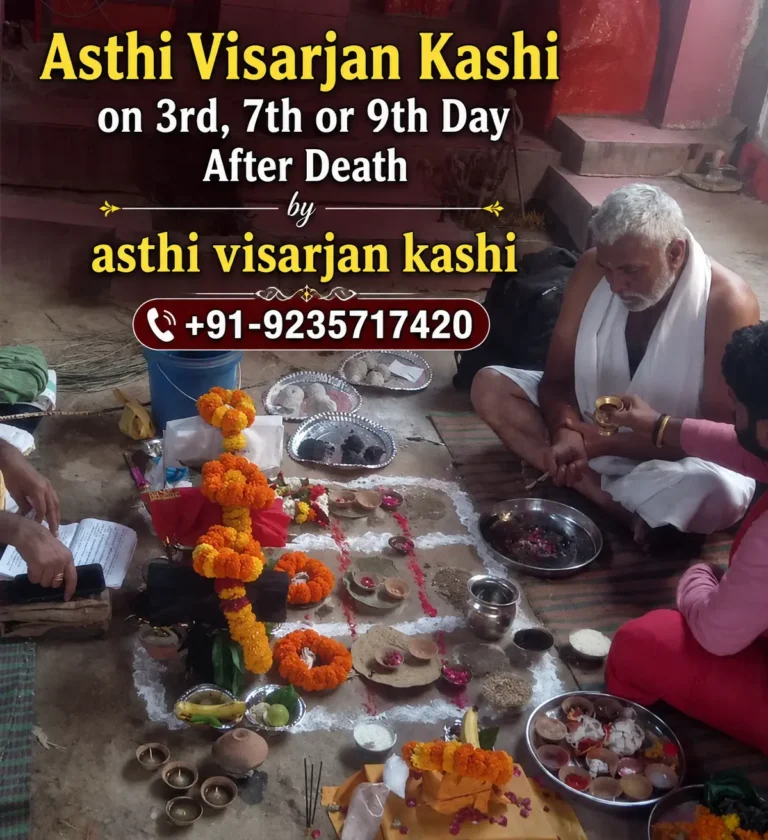
After the death of a loved one, Hindu families perform several important rituals for the peace of the departed soul. One of the most sacred rituals among them is Asthi Visarjan. In this ritual, the ashes collected after cremation are immersed in a holy river with prayers and traditional Hindu customs.
Many families prefer Kashi for Asthi Visarjan because it is considered one of the holiest spiritual cities in Hinduism. The sacred Ganga river, ancient temples, and centuries-old traditions make Kashi a deeply important place for final rites and rituals.
One common question people ask is: Should Asthi Visarjan in Kashi be done on the 3rd day, 7th day, or 9th day after death?
The answer depends on family traditions, regional customs, and religious beliefs. Different Hindu communities follow different practices, and there is no single timing followed everywhere.
For families looking for traditional Hindu rituals and proper guidance in Kashi, professional assistance for Asthi Visarjan and Pind Daan ceremonies is available through trusted services.
Choose Asthi Visarjan Service Here
Asthi Visarjan Kashi on 3rd Day After Death
Many Hindu families perform Asthi Visarjan on the third day after cremation. This tradition is commonly followed in several North Indian families where the final rites are completed early.
After the cremation process, the ashes are respectfully collected and kept safely. Family members then travel to the holy Ganga in Kashi, where the Asthi Visarjan ceremony is performed with prayers and rituals.
People who follow the third-day ritual often believe that completing the immersion earlier helps the soul continue its spiritual journey peacefully.
Importance of 3rd Day Ritual
- Traditional Hindu customs
- Early completion of final rites
- Presence of family members
- Spiritual peace for the soul
Asthi Visarjan Kashi on 7th Day After Death
Some families choose the seventh day after death for Asthi Visarjan in Kashi. In many traditions, important post-death rituals continue for several days after cremation, making the seventh day spiritually meaningful.
Families may also require additional time for travel arrangements or for relatives arriving from different cities. Because of this, the seventh day becomes a practical and religiously accepted time for the ceremony.
The atmosphere at the ghats of Varanasi during Asthi Visarjan is deeply spiritual. Priests chant Vedic mantras while families offer prayers for the peace and liberation of the departed soul.
Why Families Choose 7th Day
- Religious customs
- Travel arrangements
- Family gatherings
- Traditional beliefs
Asthi Visarjan Kashi on 9th Day After Death
In several Hindu traditions, the ninth day after death is also considered important for final rituals and prayers. Some families perform Asthi Visarjan on this day along with other religious ceremonies connected to mourning and remembrance.
The ninth day often carries emotional importance for the family because it marks an important stage in the sequence of post-death rituals.
In Kashi, many families visit sacred ghats early in the morning for the ritual. The peaceful atmosphere of the Ganga river, temple bells, and spiritual chants create a deeply emotional experience for family members.
Religious Importance of 9th Day
- Spiritual prayers
- Traditional ceremonies
- Family remembrance rituals
- Peaceful Ganga immersion
Traditional Rituals and Hindu Beliefs
According to Hindu traditions, final rites and Asthi Visarjan hold deep spiritual importance. The ritual is connected with prayers for the peace and liberation of the soul after death.
You can also understand more about Hindu funeral traditions through this reference on Antyesti Rituals .
How Families Send Asthi for Kashi Visarjan
Many families across India choose to arrange Asthi Visarjan in Kashi after cremation. Proper rituals, guidance, and arrangements help families complete the ceremony peacefully according to Hindu traditions.
Read more here: How to Send Asthi for Varanasi Visarjan
Pitru Paksha Rituals in Kashi
Pitru Paksha is considered an important period for Shradh, Pind Daan, and ancestral rituals in Hinduism. During this time, many devotees visit Kashi for traditional ceremonies performed on the banks of Maa Ganga.
Pitru Paksha 2026 Pind Daan Booking in Varanasi
Families also search for proper arrangements and pandit guidance during Pitru Paksha rituals in Kashi.
View Pitru Paksha Ritual Services
Is There a Fixed Rule for Asthi Visarjan Timing?
There is no single fixed rule in Hinduism regarding the exact day for Asthi Visarjan. Different communities and regions follow different customs.
Some families prefer the third day, while others choose the seventh or ninth day according to traditions and pandit guidance.
The most important aspect of the ritual is devotion, sincerity, and respect for the departed soul.
Conclusion
Asthi Visarjan is one of the most emotional and spiritually important rituals in Hindu tradition. Whether performed on the 3rd day, 7th day, or 9th day after death, the purpose remains the same — offering prayers, respect, and peace for the departed soul.
Every Hindu family follows its own customs and beliefs regarding the timing of Asthi Visarjan. What matters most is performing the ritual with sincerity, devotion, and proper respect according to family traditions.
1. Why is Asthi Visarjan performed on the 3rd, 7th, or 9th day after death?
In Hindu traditions, the 3rd, 7th, and 9th days after death are considered spiritually important for completing the final rites of the departed soul. Different communities and family traditions follow different timings based on customs passed down through generations. Some families prefer the 3rd day to complete the rituals early, while others choose the 7th or 9th day so relatives from different places can gather together for the ceremony. Priests in Varanasi often guide families according to their regional beliefs and religious practices.
2. Why do people prefer Kashi for Asthi Visarjan?
Kashi, also known as Varanasi, is one of the holiest pilgrimage cities in Hinduism and is deeply connected with Lord Shiva and the sacred River Ganga. Many devotees believe that performing Asthi Visarjan in Kashi helps the departed soul attain peace and spiritual liberation. The ancient ghats, temples, Vedic rituals, and spiritual atmosphere of the city make the ceremony emotionally meaningful for families. Because of this strong religious belief, thousands of families visit Kashi every year to perform the sacred ritual.
3. Can Asthi Visarjan and Pind Daan be performed on the same day?
Yes, many families choose to perform Asthi Visarjan and Pind Daan together during the same visit to Kashi. Performing both rituals together is considered spiritually beneficial for the departed soul according to Hindu traditions. During the ceremony, priests chant Vedic mantras, offer prayers, and guide the family through each step of the ritual. Many devotees also perform Tarpan and Ganga Pujan along with these ceremonies to seek blessings and peace for their ancestors.
4. Is advance booking necessary for Asthi Visarjan services in Varanasi?
Advance booking is highly helpful, especially during festival seasons, Pitru Paksha, holidays, and busy pilgrimage periods in Varanasi. Pre-arranging a priest, boat service, puja materials, and transportation helps families avoid confusion and unnecessary stress during emotional times. Many families traveling from distant states or foreign countries prefer booking verified services in advance so the rituals can be completed smoothly and according to tradition.
5. What happens during the Asthi Visarjan ceremony in Kashi?
The ceremony usually begins with prayers and purification rituals at the ghat. A priest guides the family through Vedic mantras while offerings such as flowers, milk, black sesame, and holy water are used during the ritual. The ashes of the departed soul are then respectfully immersed into the sacred Ganga river with prayers for peace and liberation. Some families also perform additional rituals, temple visits, and charity after completing the immersion ceremony in Kashi.
6. Can families from abroad perform Asthi Visarjan in Kashi?
Yes, many Hindu families living in countries such as the USA, Canada, the UK, Australia, and other parts of the world travel to Varanasi to perform Asthi Visarjan for their loved ones. For families unable to travel immediately, some verified priests and organizations also assist with arrangements according to Hindu traditions. Because the ritual is emotionally important, many overseas families prefer Kashi due to its strong spiritual significance and connection with the holy River Ganga.
7. How long does the Asthi Visarjan ritual usually take?
The complete Asthi Visarjan ceremony generally takes between one and three hours depending on the rituals included. Simple ash immersion rituals may take less time, while ceremonies combined with Pind Daan, Tarpan, Ganga Pujan, or temple visits may take longer. Families usually begin the rituals early in the morning when the ghats are peaceful and suitable for religious ceremonies. Proper arrangements with priests and boat services can also help the process go smoothly.
8. Which ghats are commonly used for Asthi Visarjan in Kashi?
Many families perform Asthi Visarjan at sacred ghats such as Manikarnika Ghat and Harishchandra Ghat in Varanasi. These ghats hold great spiritual importance in Hindu beliefs and have been connected with final rites for centuries. Priests guide families to suitable locations for performing the rituals peacefully and respectfully. The holy atmosphere of the ghats, combined with the flowing Ganga river and temple chants, creates a deeply spiritual experience.
9. Can women participate in Asthi Visarjan rituals?
Yes, women can participate in Asthi Visarjan rituals according to family traditions and personal beliefs. In many modern families, daughters, wives, mothers, and sisters actively take part in prayers and rituals for the departed soul. Customs may vary between communities, but many priests in Kashi now guide families in an inclusive manner while respecting religious traditions. Participation in prayers and offering respect to ancestors is considered spiritually meaningful for all family members.
10. What should families carry while coming for Asthi Visarjan?
Families usually bring the ashes of the departed soul, fresh clothes, flowers, and basic puja materials for the ceremony. Some people also carry photographs, sacred threads, or ritual items according to family customs. Many services in Varanasi provide complete puja arrangements, so families traveling from far away may not need to carry every item themselves. Keeping travel and ritual arrangements organized in advance can make the experience smoother during emotional times.
11. Is Asthi Visarjan possible during monsoon or winter seasons?
Yes, Asthi Visarjan rituals are performed throughout the year in Kashi, including during monsoon and winter seasons. Priests and local services continue conducting ceremonies according to weather conditions and river safety guidelines. During heavy rains or strong river currents, boat arrangements may be adjusted for safety purposes. Despite seasonal changes, thousands of devotees continue visiting Kashi every year because of its deep spiritual importance in Hindu culture.
12. Why do families perform additional rituals after Asthi Visarjan?
After Asthi Visarjan, many Hindu families continue with rituals such as Shradh, Tarpan, Brahmin Bhojan, and annual remembrance ceremonies for the peace of the departed soul. These rituals are believed to express respect, gratitude, and prayers for ancestors. In many traditions, completing these ceremonies helps strengthen the spiritual connection between family members and their ancestors. Priests in Kashi often guide families regarding the proper sequence of rituals according to their customs.
13. Can Asthi Visarjan be completed in a single-day visit?
Yes, many families complete Asthi Visarjan during a one-day visit to Varanasi. People often arrive in the morning, perform the rituals with the help of priests, visit nearby temples, and return later the same day. Proper planning of transportation, priest booking, and boat arrangements helps save time and avoids unnecessary stress. Families traveling from nearby cities especially prefer same-day ceremonies for convenience while still completing the rituals respectfully.
Asthi Visarjan Ceremony by Boat in Varanasi
Read about peaceful Asthi Visarjan rituals performed by boat on the holy Ganga river in Varanasi.
Read MoreAsthi Visarjan & Hindu Ritual Services
Explore traditional Hindu ritual services including Asthi Visarjan, Pind Daan, Shradh and spiritual ceremonies.
View ServicesPandit for Narayan Bali Pooja in Varanasi
Book experienced pandits for Narayan Bali Puja and traditional Hindu rituals in Varanasi.
Book PanditBest Asthi Visarjan Places in India
Discover sacred places in India for Asthi Visarjan including Kashi, Haridwar, Prayagraj and more.
Explore PlacesAsthi Visarjan at Harishchandra Ghat
Learn about the spiritual importance of Harishchandra Ghat for Asthi Visarjan rituals in Varanasi.
Read DetailsPitru Paksha 2026 Dates & Ritual Guide
Check Pitru Paksha 2026 dates, tithi calendar and important Hindu rituals for Shradh ceremonies.
View CalendarPitru Paksha 2026 Pind Daan Booking
Book traditional Pind Daan rituals in Varanasi during Pitru Paksha with proper Hindu customs.
Book NowTripindi Shraddh Puja at Pishachmochan
Arrange Tripindi Shraddh Puja at the sacred Pishachmochan temple with experienced pandits.
Read MoreNarayan Bali Puja in Varanasi
Traditional Narayan Bali Puja services in Varanasi with complete ritual guidance and arrangements.
View ServiceBook Asthi Visarjan Online by Courier
Learn how families arrange respectful Asthi Visarjan services in Varanasi through online booking support.
Read Guide