
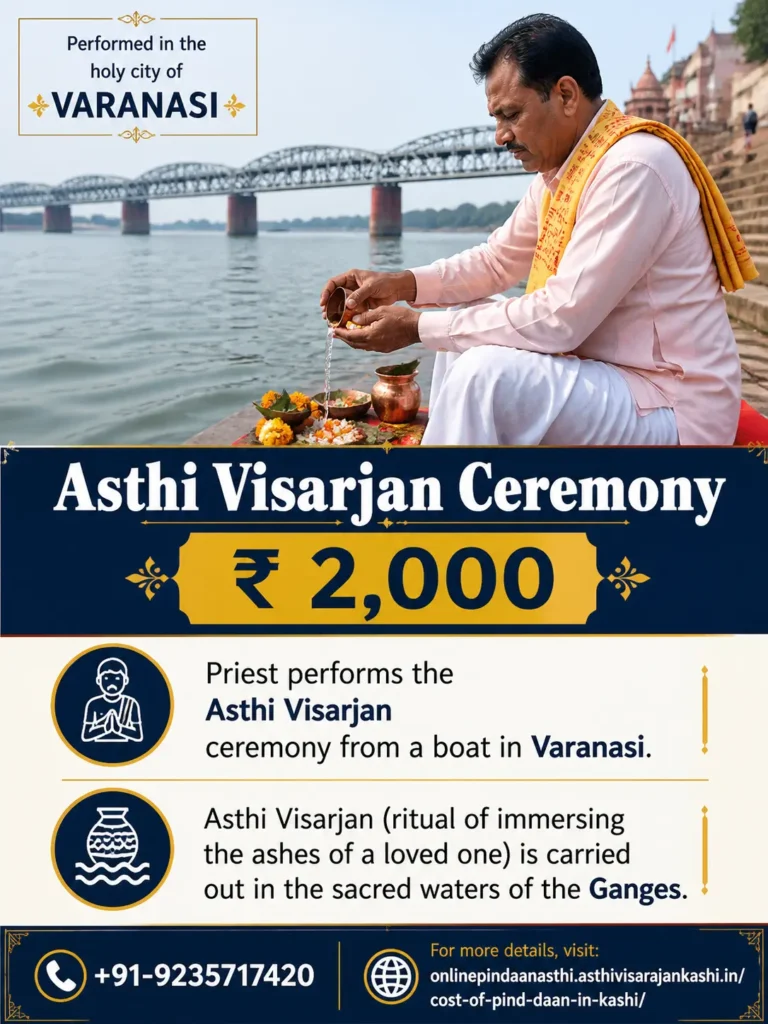
Asthi Visarjan Ceremony with Boat in Varanasi Cost,Pandit and Ritual Process Asthi Visarjan Kashi If you are planning to conduct the ceremony of Asthi Visarjan, it is important to know the process involved, the role of a professional priest, and the arrangements that need to be made for the ceremony. It is often conducted with the help of a priest and a boat, where the family is taken to the middle of the Ganga River for the final immersion of the ashes.
the immersion of ashes of the departed soul in the holy river Ganga. It is believed that by performing the ceremony at Varanasi, the soul gets peace and achieves spiritual freedom.
ceremony in Varanasi with priest, boat and complete ritual process at the holy ghats of Kashi
If you are planning to perform Asthi Visarjan in Varanasi, we can help arrange pandit, boat and all required puja materials.
ceremony in Varanasi with priest, boat and complete ritual process at the holy ghats of Kashi.
Spiritual Importance of Asthi Visarjan in Varanasi
the people. Hence, it is the most sought-after location for the final rituals of the deceased by the families. The immersion of the ashes of the deceased into the holy river Ganga with proper prayers and mantras is said to give spiritual peace to the soul of the deceased. The ritual is also a union of the physical body with the holy elements of nature.
For the families of the deceased, the ritual of Asthi Visarjan is not only a matter of religious obligation but also a matter of reverence for their ancestors.
Best Time to Perform Asthi Visarjan
Traditionally, the Asthi Visarjan ceremony is performed within 15 days after the cremation of the deceased. Many families try to complete the ritual during this time because it is considered spiritually beneficial according to Hindu traditions.
During the first 13 days after death, families usually observe certain religious rules and mourning rituals at home. These may include prayers, offering food to the departed soul, and avoiding visits to temples during the mourning period.
During this time, many families perform an initial pind daan ritual at home to offer respect to the departed ancestor. After completing these early rituals, the ashes are taken to a sacred river such as the Ganga for immersion.
Although Asthi Visarjan can also be performed later if necessary, completing it within the early days after cremation is generally considered the best according to tradition.
Preparation Before Asthi Visarjan
Before traveling to Varanasi for the Asthi Visarjan ceremony, families usually prepare the ashes of the departed person with great respect. The ashes are carefully kept in a sacred container or urn and carried safely to the holy place where the final immersion will take place. Many families prefer to perform the ceremony on the banks of the sacred Ganga in Varanasi because it is considered one of the most spiritually powerful places for last-rite rituals.
It is also common for families to consult experienced priests before arriving in the city so that the ceremony can be arranged properly. Experienced pandits guide the family about the correct Vedic process and ensure that all ritual materials are prepared before the ceremony begins. Families who want guidance about arranging the ritual in advance can also explore services available here Asthi Visarjan and Pind Daan services in Varanasi.
Experienced Pandits for Asthi Visarjan in Varanasi
The presence of a knowledgeable priest is very important during the Asthi Visarjan ceremony. Varanasi has a long tradition of priests who specialize in ancestral rituals such as Asthi Visarjan, Pind Daan, Shraddha, Narayan Bali, and other important religious ceremonies. These priests understand the correct Vedic mantras and ritual procedures required for the ceremony.
Many pandits in Varanasi come from families that have been performing rituals for generations. Their experience helps ensure that every step of the ceremony is performed properly according to tradition. During the ritual, the priest guides the family step by step, performs purification prayers, chants sacred mantras, and instructs the family when to offer flowers, water, and other ritual items.
People who want to understand priest services and arrangements for the ceremony can read detailed information here Asthi Visarjan Pandit Charges in Varanasi, where the process and priest services are explained clearly.
Cost of Asthi Visarjan Puja in Varanasi
The cost of performing the Asthi Visarjan ceremony in Varanasi can vary depending on the type of ritual arrangement chosen by the family. Some families prefer a simple ceremony with basic prayers, while others choose more detailed rituals that include additional offerings and spiritual ceremonies.
Basic Asthi Visarjan Ceremony
A simple Asthi Visarjan ritual may start from around ₹2000. In this ceremony, the priest performs the essential prayers and guides the family during the immersion of ashes into the sacred Ganga river. The ceremony is simple but spiritually meaningful and is suitable for families who wish to perform the ritual in a traditional way.
Asthi Visarjan with Pind Daan
Many families also choose to perform Pind Daan along with Asthi Visarjan during the same visit to Varanasi. This ritual includes additional offerings made from rice flour, sesame seeds, and other sacred ingredients dedicated to the ancestors. Such arrangements may cost around ₹5000 depending on the materials used and the priest services involved in the ceremony.
Premium Ritual Arrangement
For families who want to perform a more complete ritual, premium ceremony arrangements are also available. These ceremonies may include Asthi Visarjan, Pind Daan, Gaudaan, and other traditional offerings performed according to Vedic traditions. The cost for such arrangements may reach around ₹7000 depending on the rituals selected and the materials required for the ceremony.
Optional Ritual Offerings
During the ceremony, some families may also choose to perform additional religious offerings such as Brahmin Bhojan or charitable donations. These offerings are optional and depend completely on the wishes and traditions of the family.
Asthi Visarjan with Boat in the Middle of the Ganga
One of the most meaningful ways to perform the Asthi Visarjan ceremony in Varanasi is by taking a boat into the middle of the Ganga river. After completing the initial prayers on the ghat, the priest accompanies the family onto a boat which moves toward the center of the river.
The final immersion of ashes is then performed in the sacred flowing water of the Ganga while the priest chants Vedic mantras and prayers for the peace of the departed soul. The calm surroundings of the river and the sacred atmosphere of the ceremony make the experience deeply spiritual for families.
Families who wish to arrange the complete ritual process can also explore information about priest services and ceremony arrangements here Asthi Visarjan priest arrangements in Varanasi.
Boat Arrangement for the Ceremony
Many Asthi Visarjan services in Varanasi include boat arrangements as part of the ritual package. The priest travels with the family on the boat and guides them through the final steps of the ceremony. The immersion of ashes is performed respectfully while prayers are offered for the spiritual peace of the departed soul.
Booking and Payment Process
In many cases, families can complete the payment after the ceremony is performed. However, when booking the ritual in advance, a small advance amount may be required to confirm the arrangements for the priest and boat. This helps ensure that the ceremony is organized properly on the desired date.
Spiritual Meaning of the Ceremony
The Asthi Visarjan ceremony is not only a religious ritual but also a deeply emotional moment for families remembering their loved ones. It represents the final farewell and the spiritual journey of the soul after death.
With the guidance of experienced priests and the sacred environment of the Ganga in Varanasi, the ceremony becomes a meaningful way to honor ancestors and pray for their peace. Families seeking complete ritual guidance and services can also learn more about arrangements here Varanasi Asthi Visarjan and Pind Daan services.
Conclusion
The Asthi Visarjan ceremony in Varanasi is one of the most sacred and meaningful rituals in Hindu tradition. It represents the final spiritual farewell to a departed soul and is performed with deep devotion on the banks of the holy Ganga. Many families travel to Kashi because the city has been a center of spiritual traditions for centuries and is believed to provide peace and liberation to the soul when final rites are performed here according to proper Vedic rituals.
With the guidance of experienced priests and traditional ritual arrangements, the ceremony is completed with prayers, mantra chanting, and the respectful immersion of ashes into the sacred river. Performing the ritual with sincerity not only honors the departed soul but also strengthens the spiritual connection between generations. Those who wish to understand the traditional meaning and cultural significance of this sacred ritual can also read more about Asthi Visarjan (अस्थि विसर्जन).
For many families, completing the Asthi Visarjan ceremony in Varanasi brings a sense of peace, devotion, and spiritual fulfillment. It becomes a moment of remembrance, gratitude, and prayer for the eternal peace of their ancestors.
Asthi Visarjan and Pind Daan Ceremony FAQ
Related Guides for Pind Daan in Varanasi
If you are planning to perform Pind Daan or other ancestral rituals in Varanasi, it is helpful to understand the right place, proper time, and guidance from experienced priests. These factors play an important role in completing the ritual according to traditional Vedic practices. The sacred ghats of the Ganga in Kashi have been used for centuries for rituals such as Shraddha, Tarpan, and Pind Daan.
To help you understand the process better, you can explore the following detailed guides. These pages explain important information such as the most sacred ghats for performing the ritual, the auspicious time for ancestral ceremonies, and how to arrange an experienced pandit in Varanasi.
🔹 Best Place for Pind Daan in Varanasi
🔹 Best Time for Pind Daan in Varanasi
🔹 Pandit for Pind Daan in Varanasi
Reading these guides will help families understand the complete process of performing Pind Daan in Kashi with proper rituals and spiritual guidance. It also makes it easier to plan the ceremony and ensure that every step is performed respectfully according to Hindu traditions.